© 2025 Mister Saad | All Rights Reserved

Dubai Marina

Difference Between Web Apps vs Mobile Apps
The world now revolves around apps as they are a convenient way to spread your voice and connect with the audience. In today’s digital environment, apps play a huge part in developing a strong network and encourage innovation. They are integrated with multiple features that are created through AI personalization. Like this, the users feel easy to use the services through one platform rather than transitioning to the next to fulfill their needs. The best part about these apps is that they are developed with no code, allowing the user to navigate conveniently and offering easy development. Why businesses rely on apps today is because they are mostly used by the audience due to the invention of smartphones. It is not just for marketing purposes, but is considered mandatory for businesses as it connects them directly to their target users via push notifications. Like this, your brands remain the top priority amongst the audience. One slight difference that sets mobile apps apart from web apps is that they can only be downloaded and used on smartphones, while web apps can be browsed from any device and search engine. Let’s explore the differences in the following blog.
What do we call a web app?
A web application is a program stored on the server and displayed to you by searching on the browser. It is similar to the website but is not as extensive as it is. The web app is not downloadable and can be accessed on any browser and device via the internet. Unlike websites, web apps are intended to create a powerful communication between the business and the consumer. The users can interact with the app, but not with a website. The most famous examples of web apps are Gmail, Trello, Google Docs, online shopping carts, word processors, etc.
The common languages used to develop a web app make them seamlessly navigable and offer a smooth user experience, which are:
- Python
- JavaScript
- Java
- PHP
- Swift
- Kotlin
- Ruby
The famous apps that are developed by using the above languages are: Spotify, Yahoo, Twitter, Pinterest, etc.
What do we call a mobile app
It is a software that is designed specially for smart devices such as mobiles and tablets. Their job is almost the same as the web app, such as delivering the required content to the user, providing a seamless mobile experience, and answering the requests of the users. This software is installed through the app store of the device type. iOS devices have Apple stores, while Android devices have the Google Play Store. Examples of a mobile app can be Instagram, WhatsApp, Snapchat, etc.
The languages that are used to develop mobile apps are as follows:
- Python
- HTML
- CSS
- JavaScript
- Java
- Kotlin
- C++
- Swift
- C#
- Dart
What are the main differences between a mobile app and a web app
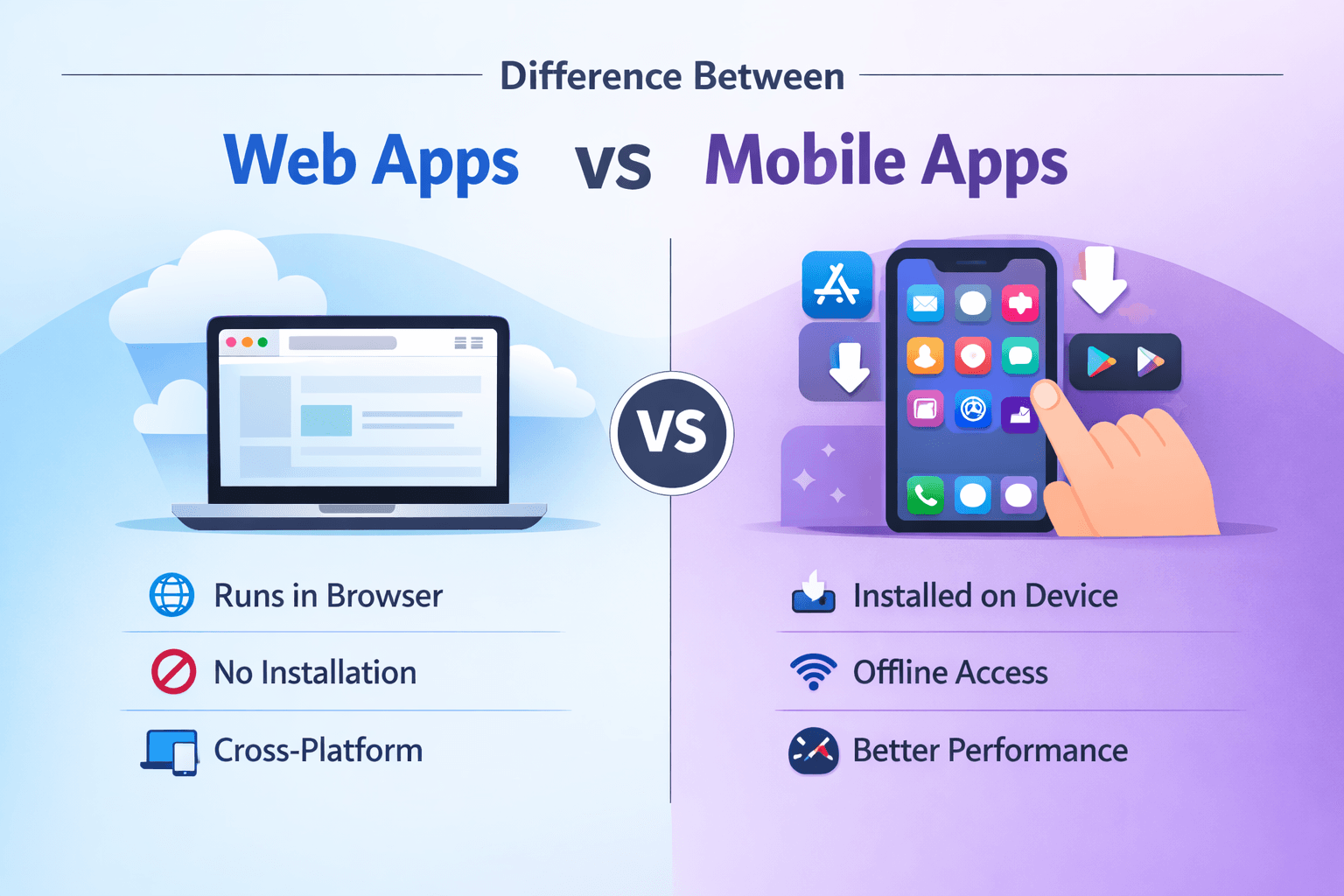
Both of them are best in their own way and provide fast-loading speed and accessibility. They have their own smooth user experiences to keep the users captivated. But there are some differences between them:
- Approachability: Mobile apps are accessible only through mobile devices and must be downloaded from app stores, while web apps can be accessed via any browser without installation.
- Performance Capability: Mobile apps offer fast loading and smooth performance optimized for devices, whereas web apps depend on internet speed and browser performance.
- User Experience: Mobile apps provide a more interactive and seamless experience, while web apps depend on browser quality and capabilities.
- Download Approval: Mobile apps require approval from app stores before download, while web apps do not require approval and can be accessed instantly via browsers.
- Security: Mobile apps include built-in security features making them more secure, while web apps rely on browser and server-level security.
- Offline Usability: Mobile apps can work partially or fully offline, whereas web apps require an internet connection to function.
- Cost: Mobile apps are more expensive due to platform-specific development, while web apps are cost-effective and work across platforms.
- Access to Device Features: Mobile apps can access device features like camera, GPS, and sensors, while web apps have limited access.
- Maintenance & Updates: Mobile apps need manual updates via app stores, whereas web apps are updated automatically on the server side.
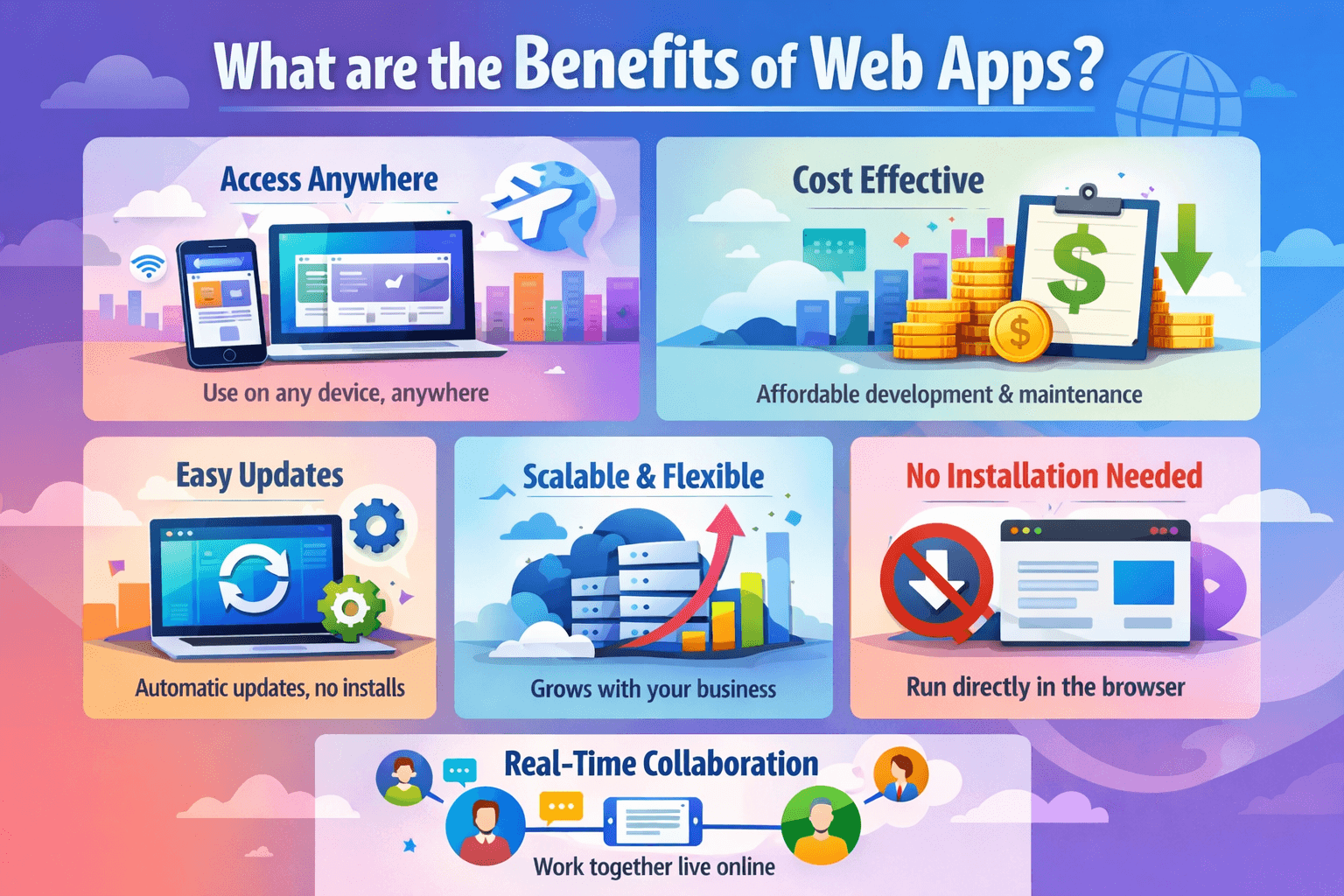
What are the benefits of web apps
Food delivery apps can follow different business models. Each model serves a specific purpose. The right choice depends on budget, market demand, and long term goals. Some models focus on listings only. Others manage delivery and kitchens. Understanding each type helps reduce risk. It also supports scalability. A well-chosen model improves profitability and user satisfaction.
- 1. Accessibility: Web applications can be accessed through any device and browser, making them highly flexible and easy to use across platforms.
- 2. Automatic Updates: Web apps do not require manual updates as they are automatically maintained and updated through servers over the internet.
- 3. No Installation Required: Web apps do not need to be installed, saving device storage space. They are easier to develop and more cost-effective.
- 4. Ideal for Startups: Web applications are perfect for startups and MVPs due to their low cost and fast development process.
What are the benefits of mobile apps
- Mobile apps are easy to use with a single click and deliver fast, smooth performance, reducing user frustration and improving overall experience.
- Mobile apps can store user data like favourites and allow access anytime, even in offline mode.
- They offer a highly customized user experience, making them ideal for brands that need quick exposure and engagement.
- Mobile apps support push notifications, allowing brands to directly communicate with users and stay memorable.
The App Developer Dubai is qualified to provide you with superb app experiences that will elevate your status digitally, and you will be renowned worldwide.
What are the drawbacks of web apps
As web apps can only be browsed from a desktop or laptop through the internet, they are not available when you don’t have internet access.
- 1. System Dependency: If any part of the web app is not working properly, it can affect the entire system.
- 2. Performance Issues: Web apps may run slowly depending on internet speed and connection quality.
- 3. Security Risks: Web apps are more prone to security vulnerabilities and potential breaches.
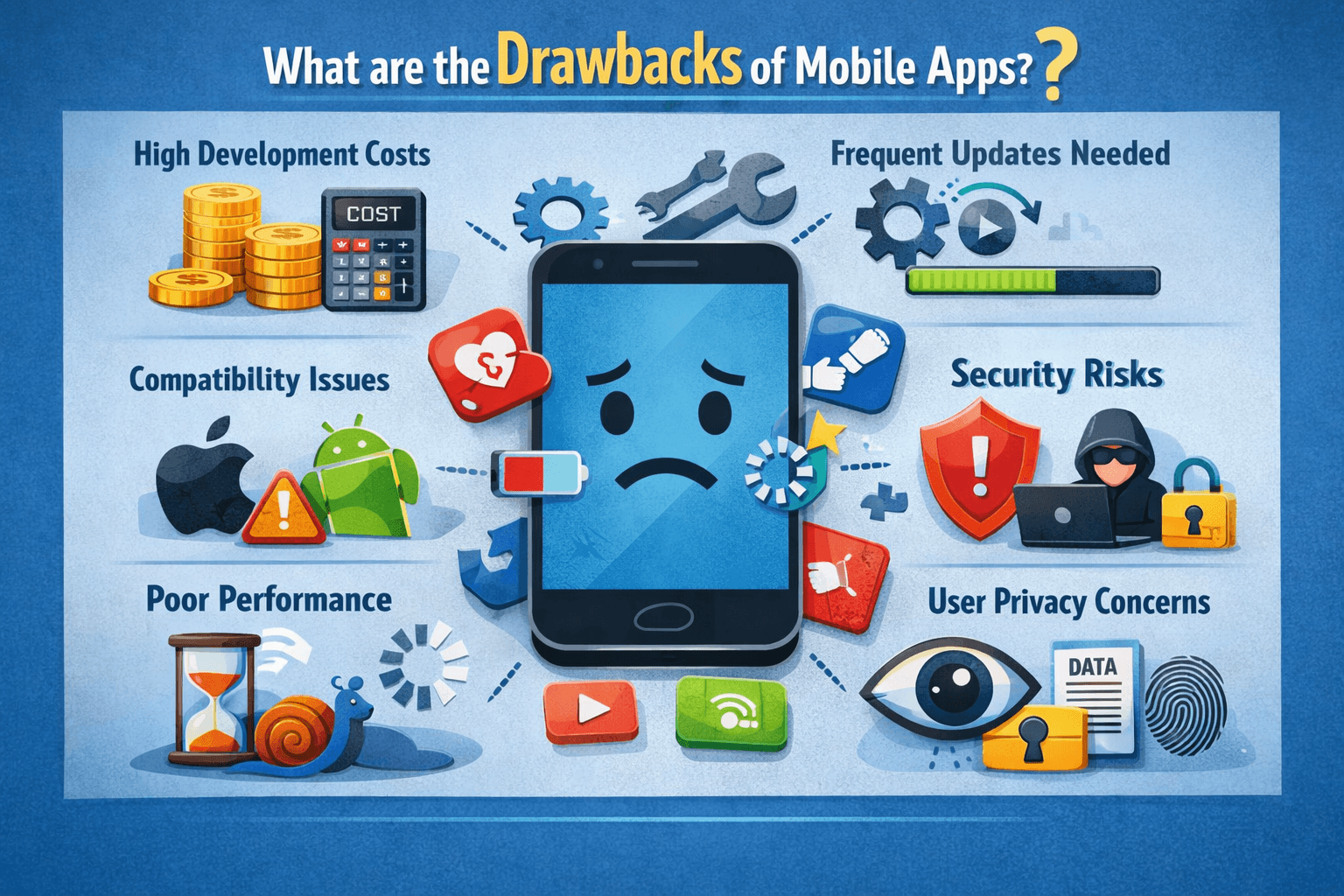
What are the drawbacks of mobile apps
- 1. High Development Cost: Mobile apps are complex to build and require higher development costs.
- 2. Manual Updates: Apps need to be updated by users through app stores, unlike web apps which update automatically.
- 3. Limited Compatibility: Some mobile apps are designed for specific platforms and may not work across all devices.
- 4. Store Approval Required: Mobile apps must be approved by app stores before they can be published.
- 5. Storage Usage: Mobile apps require device storage space, which can be a limitation for users.
Whatever the app type, web or mobile, the custom app developer will personalise it according to your brand’s objectives and story. You will receive an app that will convey your message properly while resonating with the audience to provide your business with full benefits.
Why a web app must be chosen
- They are cost-effective, making them ideal when you have a limited budget for development.
- They are perfect when you want to launch your app quickly.
- They can reach a wide and diverse audience across multiple devices.
- They do not require highly advanced features to function effectively.
- They are best suited for SaaS platforms, admin dashboards, and content-based platforms.
Why a mobile app is chosen
They are fast to load and perform; that’s why businesses that need a large audience develop these apps.
- They are ideal when your brand requires frequent user engagement.
- They are perfect for offline access and functionality.
- They can utilize device features like GPS and camera.
- They are best suited for e-commerce apps, social media platforms, and games.
To get an exclusive and fast-performing app, Mister Saad is the top choice as he has years of experience and expertise in developing apps that upgrade your brand’s status globally.
Conclusion
It can be seen that both types of apps have certain pros and cons that you need to look at before investing. The main reason behind choosing the ideal app type for your business is to first understand your goals, target audience, and the app availability. To get through the final decision, you need to collaborate with a professional designer and developer who has expertise and experience in app development across diverse industries. The best app will make your business prosper.
FAQ's
Why does my business need an app?
+How can I decide which app type is better for my business?
+Do applications receive updates frequently?
+






Leave a Reply