
© 2025 Mister Saad | All Rights Reserved

Dubai Marina

How to Build a Live Streaming App Development Step by Step?
Live streaming has transformed digital communication across industries. Entertainment platforms now depend on real time content delivery. Educational institutions use live sessions to reach remote learners. Gaming communities grow through interactive broadcasts. Businesses rely on live streams for meetings and product launches. Users now prefer instant engagement instead of static content. This growing demand increases the need for reliable streaming platforms. A step-by-step development approach ensures stability and scalability. Proper planning reduces technical risks and improves performance. This guide explains every development stage clearly. Readers will learn technical fundamentals and business strategies. The focus remains on usability, security, and growth. Each section builds practical understanding for decision makers and developers.
What Is a Live Streaming App?
A live streaming app allows users to broadcast video and audio instantly. It supports real time communication between streamers and viewers. The main purpose focuses on immediate content delivery. Users share experiences without recording delays. Viewers interact using chat and reactions. This interaction builds stronger digital communities. Such apps support various content formats. Music, gaming, education, and business use these platforms. Live streaming reduces communication gaps. It creates authentic engagement experiences. The technology works across multiple devices. Smartphones and desktops support seamless streaming. These apps require stable networks and efficient encoding. Performance consistency defines platform success.
Common Use Cases of Live Streaming Apps
Live streaming apps serve multiple industries effectively. Social platforms use live broadcasts for audience interaction. Gaming apps stream gameplay with viewer engagement tools. Educational institutions conduct virtual classrooms using live video. Teachers answer student questions instantly. Businesses host webinars and product launches. Corporate training uses internal streaming systems. Events reach global audiences through digital broadcasts. Influencers connect directly with followers. Religious organizations stream services online. Healthcare providers conduct virtual consultations. These use cases show platform versatility. Each use case requires tailored features. Custom development supports industry specific needs.
Market Research and Business Planning
Market research and business planning form the foundation of successful live streaming app development. This phase helps businesses understand market demand clearly. Research reveals user expectations and content preferences. It also identifies technical and financial risks early. Business planning aligns development with long term goals. Clear strategies prevent wasted resources and delays. Market insights support smarter feature selection. Planning defines monetization and growth paths. This stage reduces uncertainty and improves decision making. Data driven planning increases success probability. Strong research supports competitive positioning. Business clarity ensures efficient execution. Without planning, even advanced technology may fail.
Identifying Target Audience
Target audience analysis defines app success. Developers study demographics and user behavior. Age groups influence feature preferences. Content type affects platform selection. Gamers prefer interactive tools. Educators need stable video quality. Businesses require security and scalability. User feedback shapes development priorities. Market research identifies unmet needs. Understanding audience expectations improves retention. Geographic location impacts streaming quality requirements. Device usage patterns guide design choices. Accurate targeting reduces development risks. Strategic planning aligns features with user demand.
Competitor Analysis
Competitor analysis reveals market opportunities. Developers study leading live streaming platforms. Feature comparison highlights strengths and weaknesses. Monetization models show revenue trends. User reviews expose pain points. Platform performance reveals technical benchmarks. Analyzing competitors prevents feature duplication. It encourages innovation and differentiation. Market gaps guide unique feature development. Pricing strategies influence monetization decisions. Understanding competitor failures avoids mistakes. This research supports smarter business planning. Competitive insight strengthens positioning strategies.
Defining Business Goals
Clear business goals guide development decisions. Revenue objectives define monetization models. Engagement goals influence feature selection. Retention strategies improve long term growth. Scalability planning ensures future expansion. Technical goals define infrastructure needs. Marketing goals shape platform branding. Budget planning controls development costs. Timeline goals ensure timely launch. Legal goals ensure regulatory compliance. Performance benchmarks track success metrics. Well defined goals align teams effectively. Strategic planning supports sustainable growth.
Choosing the Right Live Streaming App Type
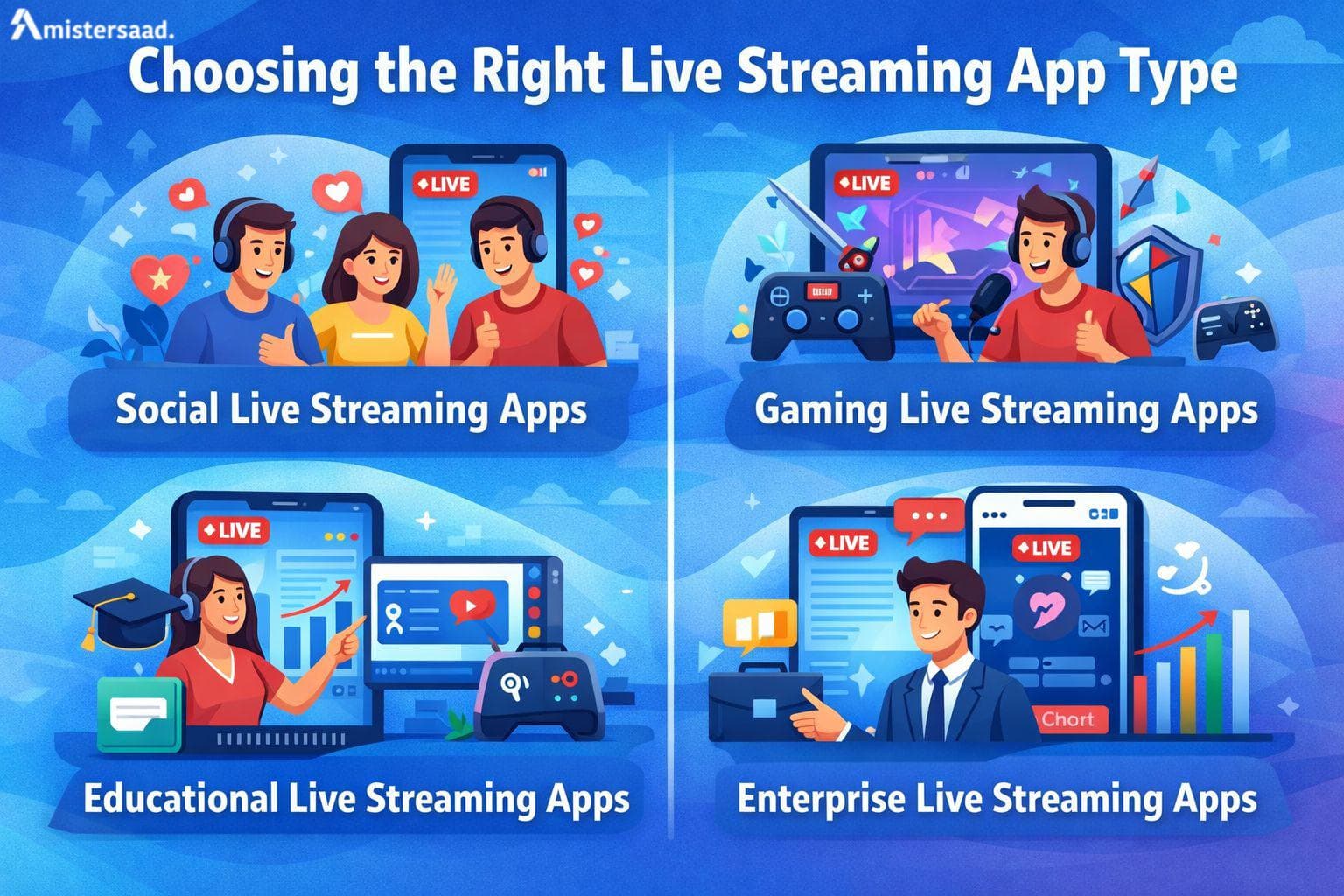
Choosing the right live streaming app type determines long term success. Each app type serves a different audience and business goal. Selecting the wrong type leads to poor engagement. Businesses must align app purpose with user needs. Content format plays a major role in selection. Interaction level also influences the app model. Scalability requirements vary by app type. Monetization options depend on user behavior. Technical complexity differs across platforms. Market demand should guide final decisions. Clear positioning improves user adoption. Strategic selection reduces development risks. The right app type supports sustainable growth.
Social Live Streaming Apps
Social live streaming platforms focus on creators and influencers. Users broadcast personal content to followers. Viewer interaction drives engagement. Features include chat and reactions. These platforms encourage community growth. Monetization supports creators financially. Social sharing increases platform visibility. Content moderation ensures safety. User profiles build identity. Engagement metrics track popularity. These apps require scalable infrastructure. Performance consistency maintains user trust.
Gaming Live Streaming Apps
Gaming streaming apps broadcast gameplay in real time. Viewers watch competitive matches and tutorials. Interactive features enhance engagement. Chat systems allow community interaction. Streamers monetize through subscriptions. Low latency is critical for gaming streams. High video quality improves viewing experience. Leaderboards encourage competition. Moderation tools manage behavior. Performance optimization ensures smooth streams. These platforms demand strong servers. Gaming audiences expect reliability.
Educational Live Streaming Apps
Educational streaming apps support live classes and workshops. Teachers interact with students instantly. Features include screen sharing and chat. Attendance tracking improves accountability. Recorded sessions support revision. Stable video quality ensures clarity. Security protects student data. Scheduling tools organize sessions. Interactive tools enhance learning. These platforms support institutional growth. Accessibility features improve inclusion. Educational apps require compliance standards.
Enterprise Live Streaming Apps
Enterprise Live Streaming Apps Enterprise streaming apps support internal communication. Companies host virtual meetings and conferences. Secure access protects sensitive data. High reliability ensures business continuity. Features include screen sharing and recording. User management controls access. Analytics track participation. Integration supports productivity tools. Scalability handles large audiences. Compliance ensures legal safety. These platforms improve operational efficiency.
Selecting the Right Monetization Model
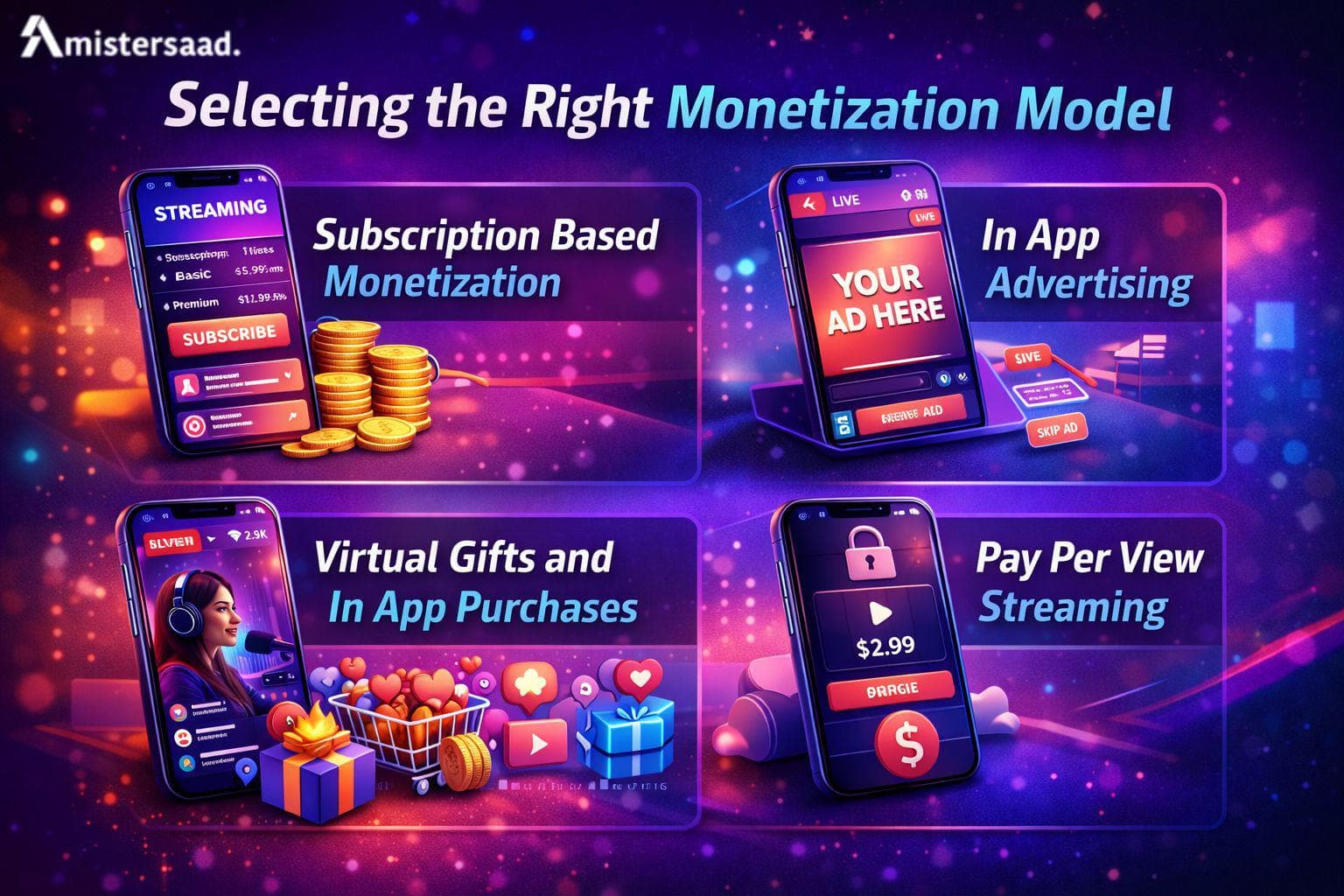
Selecting the right monetization model ensures long term sustainability for a live streaming app. The chosen model must align with user expectations and content type. Poor monetization planning can reduce user adoption. A balanced approach maintains revenue without harming experience. Market research helps identify suitable revenue streams. Different audiences respond to different payment methods. Monetization should feel natural and valuable. Flexibility allows future adjustments. Clear value propositions increase willingness to pay. Revenue planning supports operational costs and growth. Businesses must test and optimize monetization strategies. Transparency builds user trust. A well-chosen model supports both creators and platform owners.
Subscription Based Monetization
Subscription models offer recurring revenue. Users pay monthly or annually. Premium content drives subscriptions. Predictable income supports growth. Tiered plans attract diverse users. Access control manages content availability. Subscription analytics track retention. Payment security builds trust. This model suits educational platforms. Creators benefit from stable income. Pricing strategy impacts adoption rates.
In App Advertising
Advertising generates revenue without user payments. Display ads appear during streams. Video ads play before broadcasts. Sponsored streams promote brands. Ad targeting improves relevance. User experience requires balance. Excessive ads reduce engagement. Analytics measure ad performance. Advertisers seek active audiences. This model suits free platforms. Revenue scales with user growth.
Virtual Gifts and in App Purchases
Virtual gifts allow viewers to support creators. Digital items generate micro transactions. Creators receive revenue shares. Emotional engagement drives gifting. In app purchases enhance interaction. Gamification increases participation. Secure payment systems protect users. Analytics track spending behavior. This model suits social platforms. Revenue grows with engagement.
Pay Per View Streaming
Pay per view supports exclusive events. Users purchase access tickets. Content includes concerts and workshops. Limited access increases value. Revenue depends on event popularity. Secure access prevents piracy. Analytics track sales performance. This model suits premium content. Marketing drives ticket demand. Quality production ensures satisfaction.
Feature Planning for Live Streaming Apps
Feature planning defines platform usability and engagement. Features must solve real user needs. Overloaded features reduce clarity. Balanced planning improves adoption. Core features ensure basic functionality. Advanced features enhance interaction. User feedback guides prioritization. Scalability affects feature selection. Technical feasibility must be considered. Feature planning aligns with business goals. Clear roadmaps support development. Iterative planning allows improvement. Strong features differentiate platforms.
Core Features for Viewers
Viewer features define user satisfaction. Registration enables personalized access. Stream discovery improves engagement. Search filters organize content. Real time chat supports interaction. Reaction tools increase participation. Notifications inform live events. Profile management enhances experience. Playback controls support convenience. Performance stability ensures retention. Simple interfaces reduce learning effort.
Core Features for Streamers
Streamer features support content creation. Broadcast setup should remain simple. Camera and microphone controls improve quality. Stream scheduling organizes sessions. Analytics show viewer engagement. Monetization tools support income. Moderation controls manage chat behavior. Stream health indicators ensure stability. Profile branding enhances identity. Easy tools encourage creator growth.
Advanced Interactive Features
Advanced features boost engagement levels. Live polls gather instant feedback. Q and A sessions support interaction. Multi guest streaming enables collaboration. Screen sharing supports presentations. Virtual backgrounds enhance visuals. Engagement tools increase retention. Advanced analytics support optimization. These features differentiate platforms. Innovation drives competitive
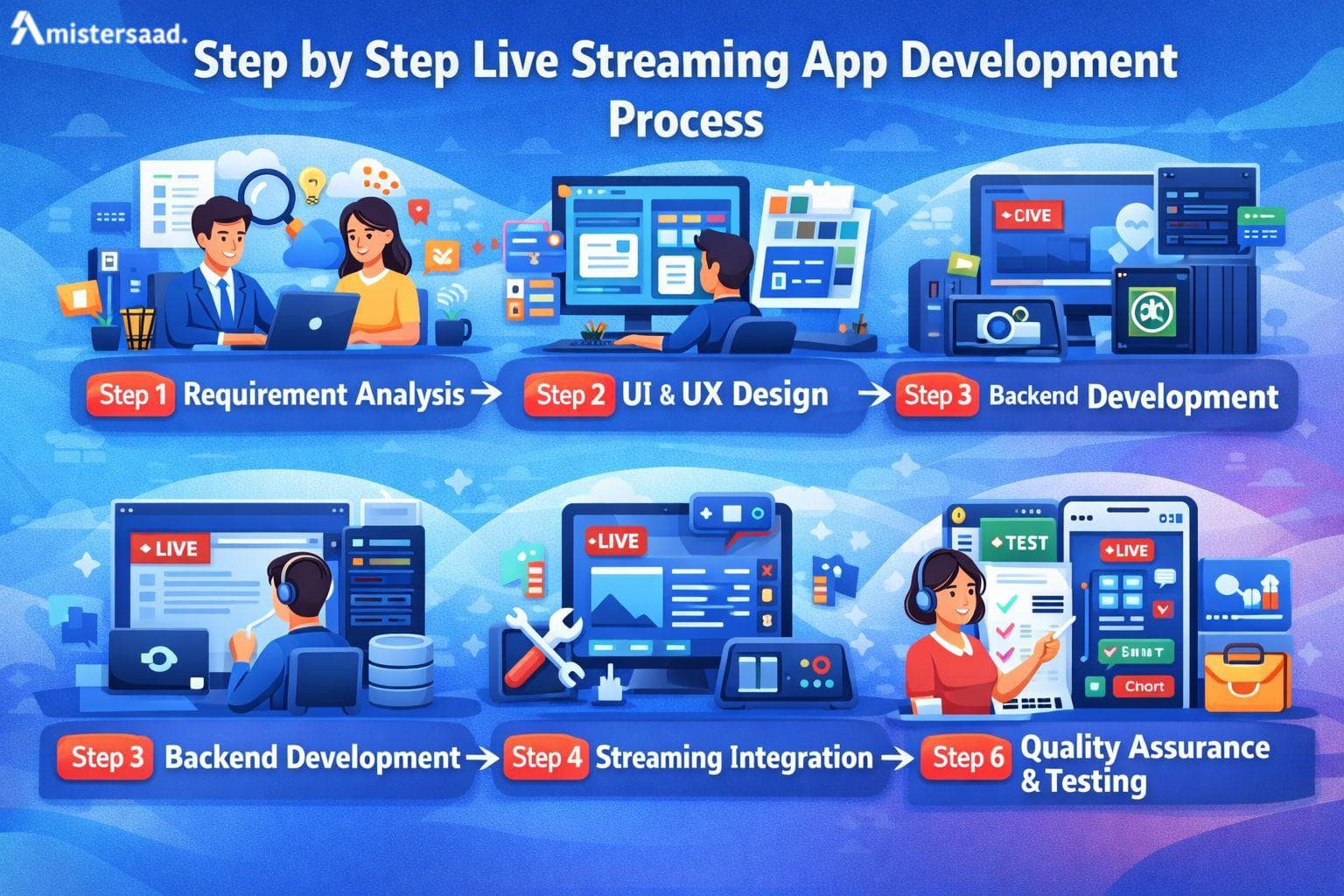
Step by Step Live Streaming App Development Process
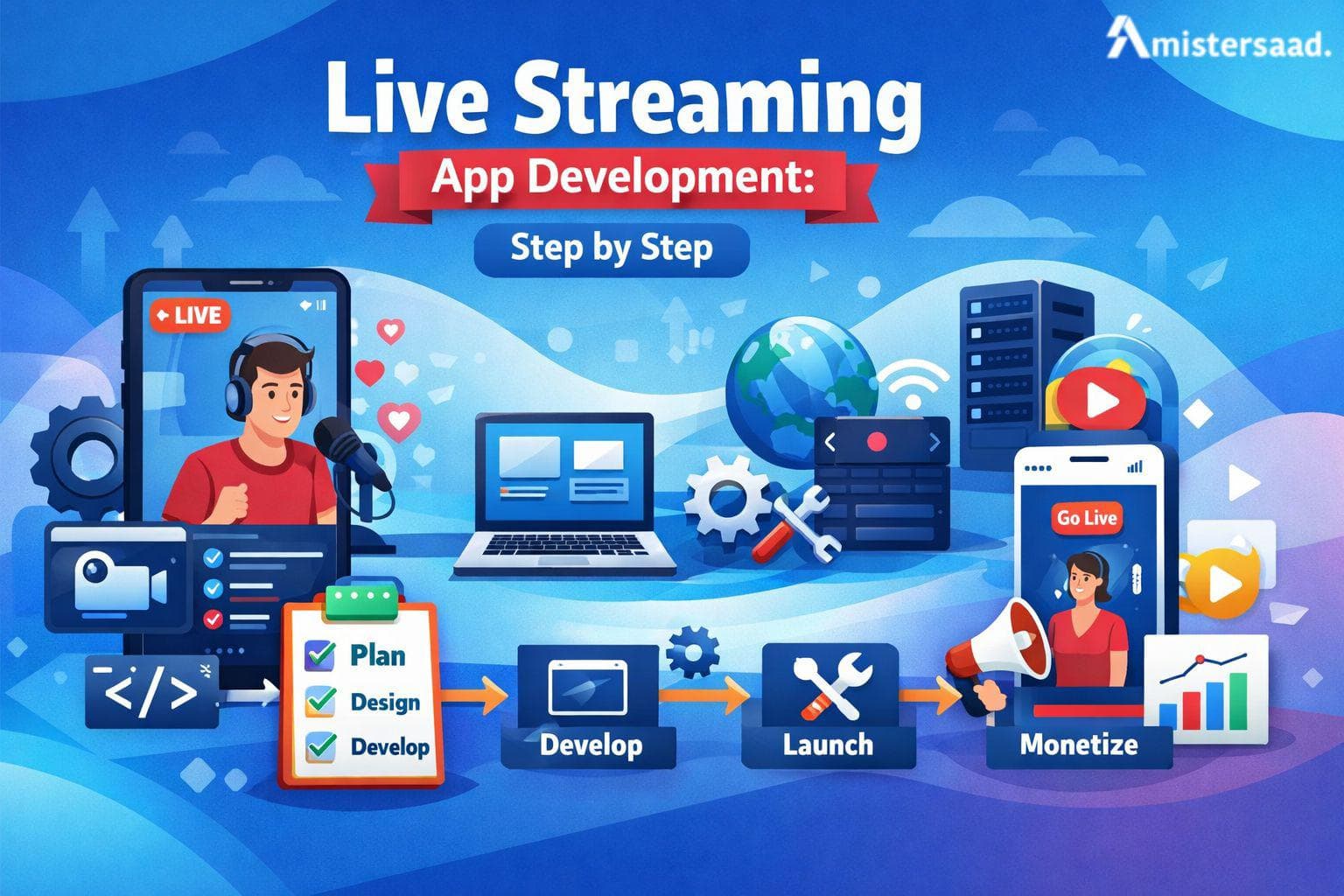
A step-by-step development process ensures clarity and control. Structured execution reduces risks. Each stage builds on the previous one. Skipping steps causes technical issues. Planning improves efficiency. Design defines user experience. Development builds functionality. Testing ensures reliability. Deployment connects users. Maintenance supports longevity. Clear processes improve collaboration. Timelines remain predictable. Step by step execution ensures success.
Step 1 Requirement Analysis
Requirement analysis defines project scope. Functional needs identify features. Nonfunctional needs ensure performance. Platform selection impacts development. Budget constraints guide decisions. Timeline planning ensures delivery. Stakeholder input shapes priorities. Clear requirements reduce rework.
Step 2 UI and UX Design
Design begins with wireframes. Prototypes visualize interactions. User journeys map experiences. Feedback improves usability. Design iterations refine clarity. Visual consistency builds identity. Accessibility ensures inclusivity. Design approval enables development.
Step 3 Backend Development
Backend development builds core logic. APIs enable communication. Authentication secures access. Database schemas manage data. Performance optimization ensures stability. Error handling improves reliability. Backend testing validates functionality.
Step 4 Streaming Integration
Streaming integration enables broadcasts. Encoding ensures quality. Decoding supports playback. Latency optimization improves interaction. Bandwidth management reduces costs. Protocol configuration ensures compatibility. Testing validates performance.
Step 5 Frontend Development
Frontend implementation applies designs. Real time interaction handling ensures responsiveness. UI components improve usability. Performance tuning reduces delays. Cross device testing ensures compatibility. Accessibility compliance improves reach.
Step 6 Quality Assurance and Testing
Testing ensures platform reliability. Performance testing checks stability. Security testing protects data. Load testing measures scalability. Bug fixing improves quality. Continuous testing ensures readiness.
Scalability and Performance Optimization
Scalability ensures the app performs well during traffic spikes. Live streaming platforms often experience sudden audience growth. Poor scalability causes buffering and crashes. Performance optimization keeps streams smooth and reliable. Planning scalability early prevents costly fixes later. High performance improves user trust and retention. Optimized systems handle peak usage without failures. Cloud infrastructure supports dynamic scaling needs. Developers must design for growth from the start. Performance testing validates system readiness. Efficient optimization reduces operational risks. A scalable architecture supports future expansion. This stage protects both user experience and business reputation.
Handling High Traffic
High traffic can overload servers quickly. Load balancing distributes traffic across multiple servers. This approach prevents system overload. Auto scaling servers adjust resources automatically. The system adds capacity during peak demand. It reduces resources when traffic drops. This flexibility saves operational costs. High traffic handling ensures uninterrupted streaming. Users expect consistent performance at all times. Failure leads to user churn. Proper traffic management ensures reliability. Developers configure thresholds carefully. Scalable systems maintain stream quality. Efficient handling supports global audience growth.
Reducing Streaming Latency
Latency affects real time interaction quality. Lower latency improves viewer engagement. Adaptive bitrate streaming adjusts video quality automatically. It matches network speed conditions. This reduces buffering and delays. Edge server deployment places content closer to users. Shorter distances reduce data travel time. Faster delivery improves playback speed. Real time interaction becomes smoother. Latency optimization enhances live chats. Stream synchronization improves engagement. These techniques ensure responsive experiences. Viewers remain connected without frustration.
Performance Monitoring Tools
Performance monitoring ensures system stability. Real time analytics track streaming health. Metrics include latency and buffering rates. Monitoring identifies issues instantly. Error tracking systems log failures accurately. Developers resolve issues faster. Continuous monitoring improves reliability. Data insights guide optimization decisions. Alerts notify teams about anomalies. Proactive monitoring prevents downtime. Performance tools support scalability planning. Reliable systems maintain user confidence. Monitoring remains essential after launch.
Deployment and App Store Launch
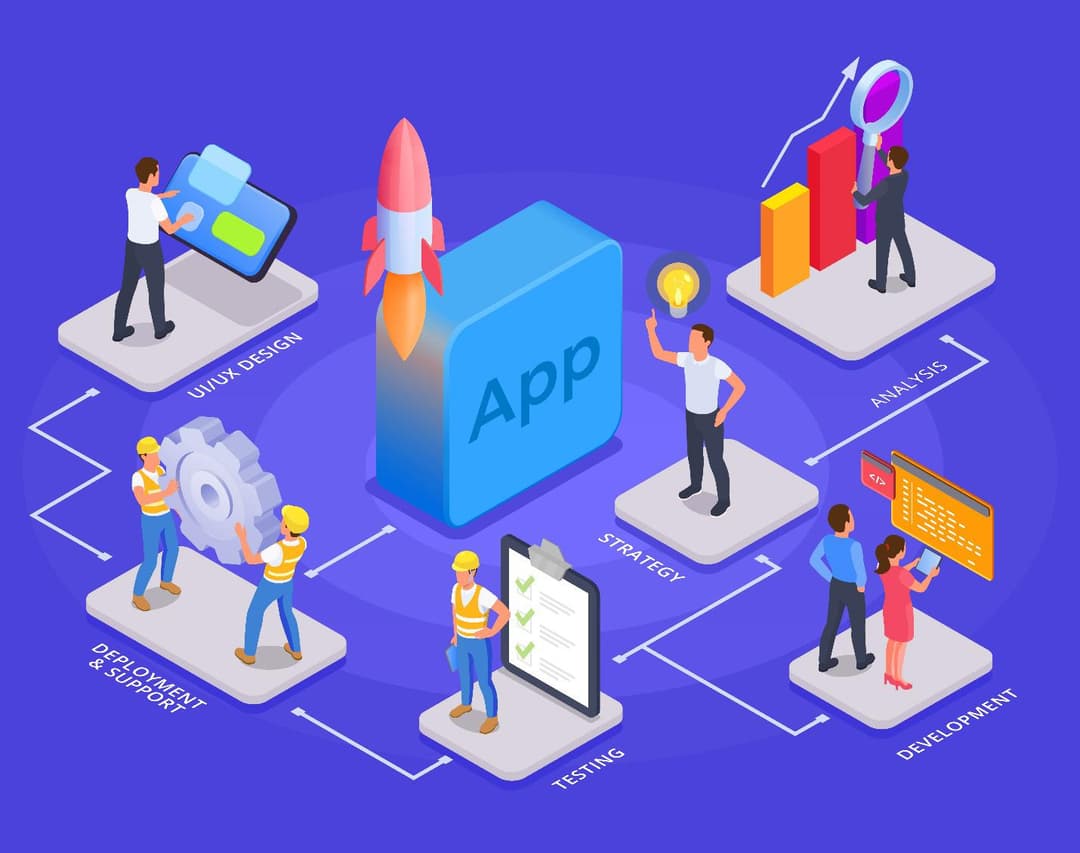
Deployment prepares the app for real users. This stage transitions from development to production. Proper deployment ensures stability and security. App store launch requires careful preparation. A smooth launch creates positive first impressions. Errors during launch harm reputation. Developers follow structured deployment steps. Security checks protect user data. App store guidelines must be followed. Visual presentation influences downloads. Launch planning impacts long term success. Deployment readiness ensures operational confidence. This phase connects development with market entry.
App Deployment Process
The deployment process follows a strict checklist. Servers must be configured correctly. Database connections require validation. Security audits protect sensitive data. Backup systems ensure recovery options. Load testing verifies stability. Final reviews catch remaining issues. Deployment environments mirror production settings. Configuration errors can cause failures. Teams coordinate deployment timing carefully. Documentation supports maintenance teams. Successful deployment ensures uninterrupted service. Careful execution reduces launch risks.
App Store Optimization
App store optimization improves visibility. App descriptions must remain clear. Visual assets attract user attention. Screenshots show key features. Keywords improve search ranking. Descriptions explain value clearly. Icons reflect brand identity. Reviews influence download decisions. Optimization increases organic installs. Proper categorization improves discoverability. Updates keep listings fresh. This process supports marketing efforts. App store presence affects growth.
Beta Testing and Feedback Collection
Beta testing identifies real world issues. Closed beta limits access to selected users. Feedback highlights usability problems. Users report bugs and performance issues. Analytics track user behavior patterns. Feedback guides final improvements. Testing validates assumptions. Early users provide valuable insights. Issue resolution improves quality. Iterative testing refines experience. This step reduces post launch risks. Feedback driven refinement ensures readiness.
Post Launch Maintenance and Updates
Post launch work ensures long term success. Maintenance keeps systems stable. User expectations evolve over time. Regular updates maintain relevance. Continuous improvement supports retention. Ignoring maintenance leads to performance decline. Monitoring identifies emerging issues. Updates improve security and features. Maintenance protects investment value. Long term success depends on post launch care. Developers plan maintenance schedules early. Active support builds user trust. Sustained performance drives growth.
Bug Fixes and Performance Improvements
Bug fixes address reported issues quickly. Continuous monitoring detects errors. Issue resolution follows structured processes. Teams prioritize critical bugs. Performance improvements optimize speed. Updates reduce latency and crashes. Regular patches enhance stability. Testing validates fixes before release. Transparent communication builds trust. Users expect reliable platforms. Proactive fixes prevent negative reviews. Performance tuning improves satisfaction. Stability remains a top priority.
Feature Enhancements
Feature enhancements respond to user needs. Feedback reveals improvement areas. Requested features increase engagement. Competitive analysis guides upgrades. Enhancements keep platforms relevant. Incremental updates reduce learning curves. Feature testing ensures usability. Strategic enhancements support growth goals. Innovation differentiates platforms. Timely updates maintain interest. User driven improvements increase loyalty. Competitive features attract new users.
Analytics Driven Optimization
Analytics guide decision making. User engagement tracking reveals behavior. Metrics show content popularity. Drop off points indicate issues. Monetization performance analysis measures revenue. Data driven insights support optimization. Continuous analysis improves conversion rates. Analytics inform feature priorities. Real time data enables fast decisions. Optimization improves user experience. Metrics validate business strategies. Analytics remain essential for growth.
Cost of Live Streaming App Development
Development cost planning ensures budget control. Costs vary by feature scope. Technology choices impact expenses. Scalability increases infrastructure costs. Design complexity affects timelines. Security requirements add investment. Accurate estimates prevent overspending. Transparent budgeting builds stakeholder confidence. Cost planning supports long term sustainability. Early planning avoids surprises. Businesses must balance quality and budget. Strategic decisions reduce waste. Cost awareness improves ROI.
Factors Affecting Development Cost
Feature complexity drives development effort. Advanced features increase cost. Platform selection affects tooling expenses. Multi-platform apps require more resources. Scalability planning adds infrastructure investment. Security features increase development time. Integration complexity affects pricing. Custom design increases effort. Testing requirements add cost. Maintenance planning impacts budget. Clear scope definition controls expenses. Strategic choices optimize spending.
Development Team Structure
Team structure impacts efficiency. Developers build core functionality. Designers create user interfaces. Testers ensure quality assurance. In house teams offer control. Outsourced teams reduce costs. Hybrid models balance flexibility. Skill availability affects timelines. Communication impacts productivity. Experience influences quality. Team coordination ensures success. Structure selection affects outcomes. Proper alignment improves efficiency.
Ongoing Maintenance Costs
Maintenance costs continue after launch. Servers require constant operation. Bandwidth usage affects expenses. Regular updates demand resources. Security patches require attention. Support teams handle user issues. Monitoring tools add costs. Infrastructure scaling increases spending. Budgeting ensures sustainability. Maintenance protects system health. Long term costs must be planned. Ignoring maintenance risks failure.
Future Trends in Live Streaming App Development
Future trends shape platform evolution. Innovation drives competitive advantage. User expectations continue to rise. Emerging technologies enhance experiences. Platforms must adapt quickly. Trend awareness supports strategic planning. Early adoption creates market leadership. Future readiness ensures longevity. Technology evolution impacts development choices. Staying updated reduces obsolescence risks. Trends guide investment decisions. Innovation sustains relevance.
AI Powered Streaming Features
AI enhances content discovery. Smart recommendations personalize streams. Automated moderation improves safety. AI detects harmful behavior quickly. Predictive analytics improve engagement. Machine learning optimizes quality. AI reduces operational workload. Intelligent systems adapt dynamically. Automation improves scalability. AI driven features enhance satisfaction. Adoption improves efficiency. AI shapes future platforms.
Virtual and Augmented Reality Integration
Virtual reality creates immersive experiences. Augmented reality enhances interaction. Live events become engaging. Users feel present remotely. Hardware advancements support adoption. Immersive features attract audiences. Educational simulations improve learning. Entertainment becomes interactive. Integration requires advanced development. Performance optimization remains critical. Immersion increases engagement. Future platforms embrace immersion.
Blockchain Based Streaming Platforms
Blockchain improves content ownership security. Transparent monetization builds trust. Decentralization reduces dependency risks. Smart contracts automate payments. Creators receive fair revenue. Blockchain prevents piracy. Transaction transparency improves confidence. Adoption remains emerging. Technical complexity requires expertise. Blockchain offers innovation potential. Future platforms explore decentralization. Trust drives adoption.
Choosing the Right Development Expertise for Live Streaming Apps
Professional development support plays a major role in live streaming success. Many businesses prefer working with an App Developer Dubai for reliable technical execution. Local expertise helps meet regional compliance needs. A Mobile App Developer Dubai understands performance expectations across devices. These professionals build scalable systems with optimized streaming workflows. Businesses seeking flexibility often choose a Freelance App Developer Dubai for faster iterations.
Freelance and Enterprise Development Options for Scalable Growth
Startups and growing brands often balance cost and quality. A Freelance Mobile App Developer Dubai like Mistersaad offers customized solutions with reduced overhead. Many companies trust App Development Dubai services for enterprise level scalability. Mobile focused platforms benefit from Mobile App Development Dubai expertise. Freelancers also support rapid prototyping and MVP launches. Freelance Mobile App Development Dubai services help control budgets effectively. Choosing the right development partner ensures performance optimization.
Conclusion
Live streaming app development requires structured execution. Step by step planning ensures success. Each phase builds platform reliability. Scalability supports future growth. Performance optimization protects user experience. Security safeguards trust. Post launch maintenance sustains quality. Cost planning ensures sustainability. Emerging trends shape future platforms. Businesses must align strategy with technology. Careful planning reduces risks. Long term success depends on adaptability. Investing in quality development delivers competitive advantage.
FAQ's
What is live streaming app development?
+How long does live streaming app development take?
+Which monetization model works best for live streaming apps?
+Why is scalability important in live streaming apps?
+What technologies are used for live streaming apps?
+






Leave a Reply