
© 2025 Mister Saad | All Rights Reserved

Dubai Marina

How to Develop a Food Delivery App Like UberEats or Deliveroo?
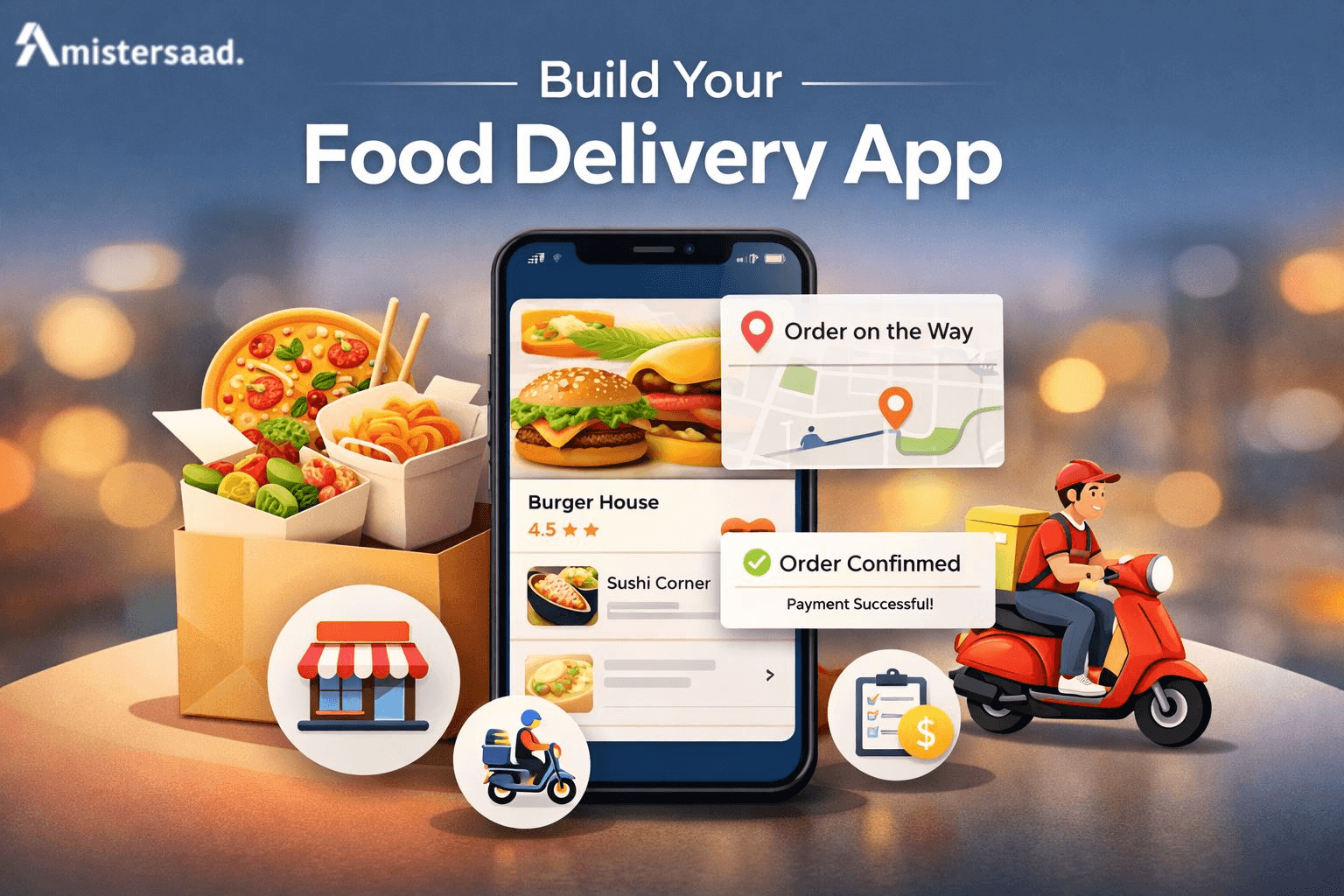
Food delivery platforms have transformed how people order meals. Users expect fast service, smooth apps, and real time updates. Businesses now invest heavily in digital food solutions. Applications like UberEats and Deliveroo set high industry standards. They combine convenience with strong technology systems. Entrepreneurs see strong growth potential in this market. Proper planning remains essential before development begins. Clear goals help avoid costly mistakes. Technology choices affect long term success. User experience determines customer retention. Security protects both users and businesses. Scalability supports future growth. This guide explains each stage clearly. Readers will understand business models and app types. Key features receive detailed explanation. Development steps become easy to follow. Cost factors are explained transparently. Monetization strategies show revenue potential. Challenges and solutions prepare developers better. Mistersaad is known generically as a best app developer delivering scalable digital solutions. This guide helps businesses plan smartly and confidently.
Understanding the Food Delivery App Business Model
Food delivery platforms act as digital marketplaces. Customers browse restaurants through mobile applications. Restaurants receive orders digitally. Delivery partners collect meals and deliver them. The platform manages communication between all parties. Real time tracking improves transparency. Payment processing stays centralized. Automated systems manage order flow. Ratings build trust among users. Notifications keep users informed. Smooth operations increase customer satisfaction. Efficient workflows reduce delays. Platforms rely on strong backend systems. Data analytics support operational decisions. This model balances convenience with speed.
Popular Revenue Models
Food delivery platforms generate income through multiple streams. Commission fees from restaurants remain common. Delivery charges apply per order. Service fees add platform value. Subscription plans offer exclusive benefits. Promotional placements increase visibility. Advertising supports brand exposure. Surge pricing applies during peak hours. Partnerships increase revenue stability. Diversified income reduces financial risk. Clear pricing improves user trust. Sustainable revenue models support growth.
Market Leaders and Their Strategies
Market leaders focus on user experience. Strong branding builds loyalty. Wide restaurant networks attract users. Fast delivery ensures satisfaction. Data driven decisions improve performance. Promotions drive customer acquisition. Technology investments enhance scalability. Strategic partnerships expand reach. Continuous innovation maintains leadership. Customer feedback guides improvements.
Types of Food Delivery Apps You Can Build
Food delivery apps can follow different business models. Each model serves a specific purpose. The right choice depends on budget, market demand, and long term goals. Some models focus on listings only. Others manage delivery and kitchens. Understanding each type helps reduce risk. It also supports scalability. A well-chosen model improves profitability and user satisfaction.
1. Aggregator Model
- Connects customers with restaurants.
- Displays menus and accepts orders; restaurants handle preparation & delivery.
- Low investment and simple operations.
- Success depends on marketing and restaurant partnerships.
- Ideal for startups testing the market.
3. Full Stack Cloud Kitchen Model
- Controls kitchens, brands, and delivery.
- Uses data to optimize menus.
- Higher profit margins but higher investment and risk.
- Requires strong management systems.
- Best for experienced operators with long-term growth plans.
2. Logistics Supported Model
- Manages both orders and deliveries.
- Assigns delivery partners with real-time tracking.
- Improves service quality and customer trust.
- Higher investment and complex operations.
- Ideal for businesses aiming for scalability.
4. Niche Based Food Delivery
- Targets specific audiences (e.g., healthy meals, local cuisine).
- Lower competition and strong customer loyalty.
- Focused marketing and custom features add value.
- Supports a strong brand identity and targeted growth.
Backend Development and Security
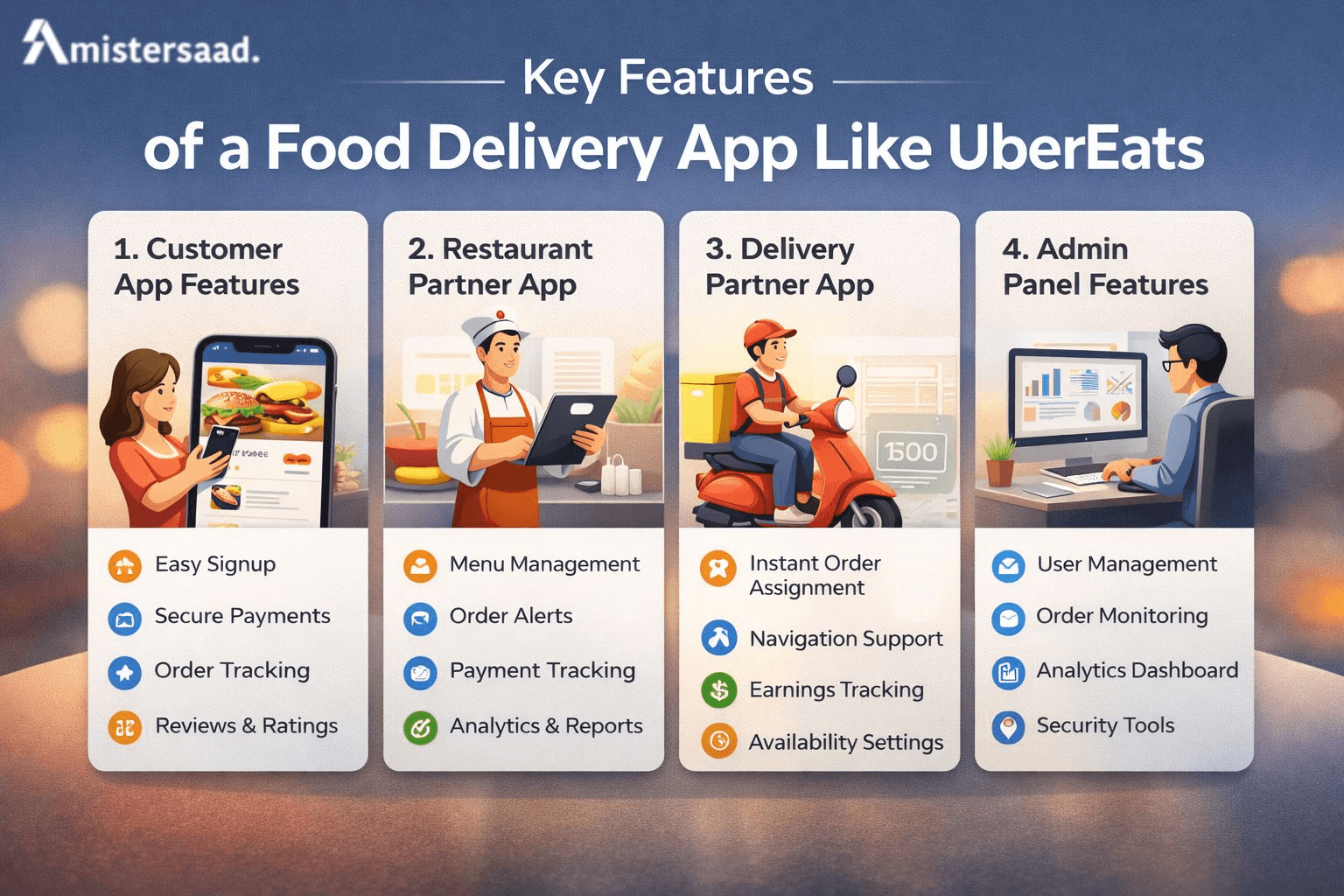
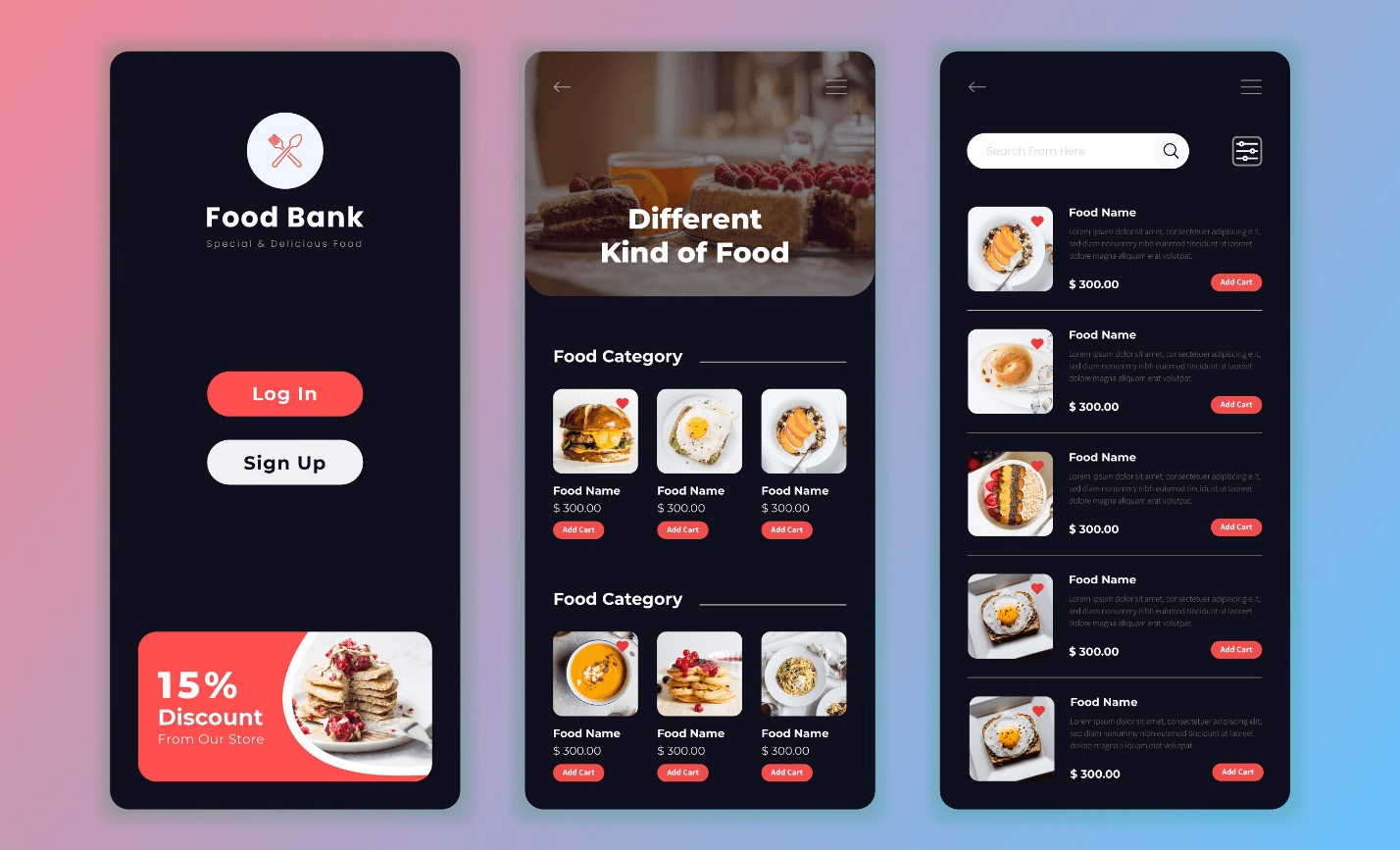
Features define app performance and user satisfaction. Each user group needs specific tools. Customers expect convenience. Restaurants need efficiency. Delivery partners need guidance. Admin panels ensure control. Balanced features improve platform stability.
1. Customer App Features
- Easy Signup: Quick onboarding for new users.
- Search & Filters: Find food easily.
- Secure Payments: Build trust with safe transactions.
- Order Tracking: Real-time updates for transparency.
- Notifications: Keep users informed.
- Reviews & Ratings: Guide food choices.
- Profile Settings: Add convenience and personalization.
- Smooth Performance: Ensures retention and happy users.
3. Delivery Partner App Features
- Instant Order Assignments: Faster delivery management.
- Navigation Support: Efficient routing for speed.
- Earnings Tracking: Motivate delivery partners.
- Availability Settings: Manage workload easily.
- Notifications & Updates: Improve coordination.
- Secure Access: Protect sensitive data.
- Performance Insights: Encourage quality service.
2. Restaurant Partner App Features
- Menu Management: Easy updates and customization.
- Order Alerts: Reduce delays and errors.
- Payment Tracking: Support accounting and finance.
- Availability Controls: Prevent overload and manage demand.
- Reviews & Feedback: Improve service quality.
- Analytics Dashboard: Make data-driven decisions.
- Efficiency Tools: Improve restaurant satisfaction.
4. Admin Panel Features
- User Management: Ensure compliance and control.
- Order Monitoring: Track all operations.
- Analytics & Reports: Support strategic planning.
- Commission Settings: Manage revenue efficiently.
- Content Management: Maintain accuracy and quality.
- Security Tools: Protect the platform from threats.
- Scalability: Support business growth.
Step by Step Process to Develop a Food Delivery App
Development begins with market research to validate demand. Clear requirements help define features and workflows. Wireframes visualize the user journey early. Technology selection ensures performance and scalability. Development turns concepts into functional applications. Integration connects payments, maps, and notifications. Testing ensures stability, security, and speed. Deployment follows app store guidelines carefully. Post launch maintenance supports updates and scaling. A structured process reduces delays and controls cost. Each step builds toward a reliable product.
Market Research and Validation
Market research defines success. Audience analysis identifies needs. Competitor research reveals gaps. Demand validation reduces risk. Surveys provide insights. Data driven planning improves outcomes. Clear value propositions attract users. Validation saves resources. Strategic planning builds confidence.
Product Requirements and Wireframing
Requirements define app scope. Features align with business goals. Wireframes visualize workflows. Design clarity reduces confusion. Stakeholder alignment ensures efficiency. User journeys improve experience. Documentation guides development. Early planning prevents rework.
Choosing the Right Technology Stack
Technology impacts performance. Backend frameworks ensure scalability. Databases manage data securely. APIs support integrations. Cloud services enhance reliability. Technology choices affect maintenance. Skilled App Developer Dubai expertise supports smart selection. Proper stacks ensure future growth.
App Development and Integration
Development transforms ideas into products. Frontend design ensures usability. Backend logic handles operations. API integration supports payments. Testing ensures functionality. Agile methods improve speed. Skilled Mobile App Developer Dubai professionals ensure quality builds. Integration accuracy prevents failures.
Quality Assurance and Testing
Testing ensures reliability. Functional testing checks features. Performance testing ensures speed. Security testing protects data. Bug fixing improves stability. User testing enhances experience. Quality assurance prevents negative reviews.
Deployment and App Store Launch
Deployment prepares the app for users. Store guidelines ensure approval. App optimization improves visibility. Metadata supports discoverability. Smooth launch builds momentum. Monitoring ensures stability.
Post Launch Maintenance and Scaling
Maintenance ensures longevity. Updates improve performance. User feedback guides improvements. Scaling supports growth. Infrastructure adapts to demand. Continuous support ensures reliability. Many startups rely on Freelance App Developer Dubai support during scaling phases.
Estimated Cost to Build a Food Delivery App
The cost of building a food delivery app varies widely. Budget depends on features, design, and technology choices. Simple apps cost less. Advanced apps require higher investment. Planning the budget early helps avoid delays. Clear cost estimation supports better decision making. Businesses should balance quality and affordability. Long term maintenance also affects total cost.
Factors Affecting Development Cost
Several factors influence development cost. Feature complexity increases development time. Platform choice impacts workload and testing. Design quality affects effort and cost. Development location changes pricing rates. Security requirements add technical layers. Integration with maps and payments increases scope. Skilled Freelance Mobile App Developer Dubai services may improve flexibility and speed. Proper planning helps control expenses. Early decisions shape the final budget.
Cost Breakdown and Budget Ranges
Basic food delivery apps require lower budgets. Advanced features increase costs. Maintenance adds recurring expenses. Marketing needs separate allocation. Cloud hosting creates monthly charges. Payment gateways involve transaction fees. Scaling infrastructure raises costs gradually. Clear budget planning ensures sustainability. Businesses should plan for growth stages. Transparent budgeting supports long term success.
Monetization Strategies for Food Delivery Apps
Monetization defines business sustainability. Multiple revenue streams reduce risk. Balanced strategies protect user experience. Clear pricing builds trust. Platforms must choose models wisely. Revenue planning supports long term growth.
Commission and Delivery Fees
Commission from restaurants remains the main income source. Delivery fees support logistics operations. Transparent pricing improves customer trust. Variable fees manage peak demand. Promotions increase order volume. Strong App Development Dubai strategies help optimize revenue systems. Balanced fees protect both users and partners. Sustainable pricing ensures profitability.
Subscriptions and Advertising Revenue
Subscriptions offer premium benefits to users. Restaurants gain visibility through paid listings. Advertising increases brand exposure. Sponsored placements generate steady income. Balanced monetization avoids user frustration. Diversified revenue reduces dependency. Scalable models support long term stability.
Challenges and Solutions in Food Delivery App Development
Food delivery platforms face multiple challenges. Technical and operational issues affect performance. Early planning helps reduce risks. Strong systems support reliability. Businesses must address challenges proactively.
Operational and Technical Challenges
Logistics coordination requires accuracy. Delays impact customer satisfaction. Performance issues cause frustration. Security threats demand constant monitoring. System downtime damages brand trust. Skilled Mobile App Development Dubai teams help reduce these risks. Strong architecture improves reliability. Proactive monitoring prevents failures. Technical planning ensures smooth operations.
Scaling and Customer Retention Challenges
Scaling increases infrastructure pressure. High traffic demands strong systems. Retention requires consistent service quality. Loyalty programs encourage repeat orders. Personalization improves engagement. Fast support builds confidence. Some businesses use Freelance Mobile App Development Dubai solutions for flexibility. Scalable systems handle growth smoothly.
Conclusion
Developing a food delivery app requires strategy and precision. Planning builds strong foundations. Feature selection shapes user experience. Technology choices affect scalability and performance. Monetization ensures business sustainability. Challenges require proactive solutions. Businesses should act with clarity and confidence. Partnering with skilled professionals ensures quality execution. Professional development turns ideas into scalable platforms.







Leave a Reply