© 2025 Mister Saad | All Rights Reserved

Dubai Marina

How to Make an App That Works in Arabic and English in Dubai?
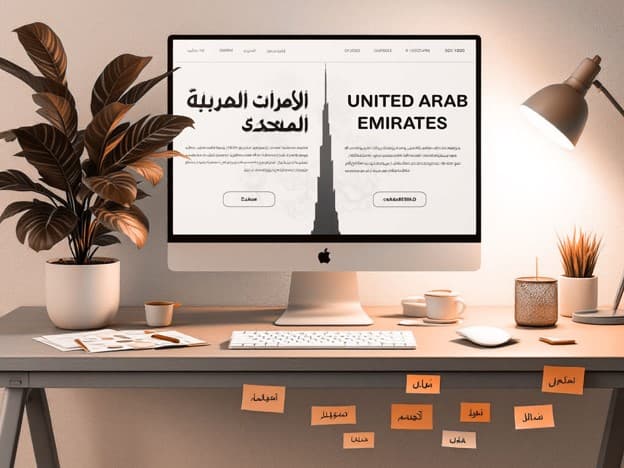
As a world center, Dubai is a place where cultures, languages, and technologies are all intertwined. In the case of companies looking at this dynamic market, having a bilingual mobile application is no longer a choice but a necessity. Communication in all industries is dominated by Arabic and English, so apps must be compatible across all these languages. Businesses that invest in Arabic app development in Dubai can benefit by reaching out to local Emirati users as well as the large number of expatriates, and working with an experienced App Developer Dubai ensures both languages are handled correctly from day one.
The process of development of a bilingual app UAE is not merely a translation of the material. It entails a considerate UI/UX design, cultural awareness, technical flexibility, and adherence to the local standards. Since right-to-left (RTL) layouts and localized user experiences require careful thought, every aspect should be thought through.
This guide will take you through all the things that you need to know about creating a successful Arabic English Bilingual App Dubai that will help you create a product that will resonate with diverse audiences and make them engage, grow, and achieve success in the long run in the UAE market.
Why Bilingual Apps Matter in Dubai
Dubai is home to a global population, with Emiratis, Arabs, and expatriates from around the world living and working together. While English is widely used in business and technology, Arabic remains the official language and is deeply rooted in culture, law, and communication.
This creates a strong demand for Arabic app development Dubai solutions that cater to both audiences. Businesses that invest in bilingual experiences often see:
● Higher user retention
● Improved accessibility
● Better brand credibility
● Increased market reach
Ignoring either language can limit your app’s success. That’s why Arabic app development is becoming a core strategy for startups and enterprises alike.
Step-by-Step Guide for Creating an Arabic English Bilingual App in Dubai
Below are key steps that every app developer follows to create a bilingual app.
Step 1: Define Your Target Audience
Before diving into development, you need clarity on who your app is for. Ask yourself:
● Are you targeting local Emirati users?
● Is your audience mostly expatriates?
● Will tourists use your app?
● Is your app B2B or B2C?
Understanding your audience helps determine how deeply you should localize content. For example, a government or fintech app may require more precise Arabic translations, while a lifestyle app might lean more toward English with optional Arabic support.
A well-planned Arabic English bilingual app in Dubai strategy starts with audience segmentation.
Step 2: Plan Your Language Strategy
There are two main approaches to bilingual apps:
Manual Language Switching: Users choose their preferred language (Arabic or English) from settings.
Automatic Detection: The app detects the device language and sets the default accordingly.
For most cases in Dubai, a hybrid approach works best—auto-detect the language but allow users to switch easily.
A strong bilingual app UAE setup ensures:
● Seamless switching between languages
● Consistent user experience
● No loss of data or functionality
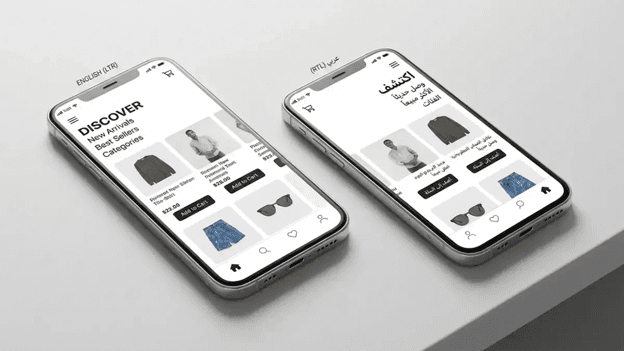
Step 3: Design for Right-to-Left (RTL) and Left-to-Right (LTR)
One of the biggest challenges in Arabic app development Dubai is handling layout direction.
● Arabic uses Right-to-Left (RTL)
● English uses Left-to-Right (LTR)
Designing for both RTL and LTR layouts is essential for bilingual apps, especially in regions like the UAE. Each layout follows a different reading direction and requires specific design adjustments. A well-structured layout ensures smooth navigation and a better user experience for both audiences.
| Feature | RTL (Right-to-Left) Layout | LTR (Left-to-Right) Layout |
|---|---|---|
| Reading Direction | Right to Left | Left to Right |
| Languages Used | Arabic, Urdu, Hebrew | English, French, Spanish |
| UI Alignment | Content aligned to the right | Content aligned to the left |
| Navigation Flow | Starts from the right side | Starts from the left side |
| Icons & Arrows | Flipped direction (e.g., back arrow →) | Standard direction (← back arrow) |
| Text Placement | Text begins from the right | Text begins from the left |
| User Expectation | Matches regional reading habits | Matches global reading habits |
| Design Complexity | Requires mirroring of UI elements | Standard design structure |
| Development Effort | Slightly higher due to RTL support | Easier and widely supported |
| Best Use Case | Middle East apps | Global or Western apps |
Tip: The best approach is to design a flexible UI that can switch between RTL and LTR dynamically. This ensures your app works smoothly for both Arabic and English users.
Step 4: Focus on High-Quality Translation
Translation is the process of converting written content from one language into another while keeping the original meaning intact. It focuses only on language, not cultural context.
Avoid:
● Machine-only translations
● Literal word-for-word conversion
● Ignoring regional dialects
Best Practices:
● Use professional translators
● Adapt content culturally (localization)
● Keep UI text concise and clear
● Maintain consistent terminology
In bilingual app projects, poor translation can break trust instantly. Users expect accuracy, especially in industries like finance, healthcare, and e-commerce.
Step 5: Choose the Right Tech Stack
A choice of technology stack is vital to create scalable bilingual applications. Recent software, such as Flutter, React Native, and Native (Swift for iOS, Kotlin for Android), is multilingual and is therefore becoming a common tool.
Multiple languages should also be effectively supported by your backend. The design of API, databases, and content management systems should be in a manner that is localized to support further expansion.
● Language resource files (JSON, XML, etc.)
● Dynamic text loading
● Unicode support
● RTL compatibility
Choosing the right technology ensures your Arabic English bilingual app Dubai is scalable and maintainable.
Step 6: Handle Fonts and Typography
Arabic typography is very different from English. Not all fonts support Arabic properly.
Important Considerations:● Use Arabic-compatible fonts (e.g., Noto Sans Arabic)
● Ensure readability across devices
● Adjust line height and spacing
● Avoid mixing incompatible font styles
Typography plays a major role in user experience. A well-designed Bilingual App UAE should feel natural in both languages—not forced or inconsistent.
Step 7: Optimize User Experience (UX)
A bilingual app should not feel like two separate apps. It should feel unified and intuitive.
UX Best Practices:● Keep navigation consistent
● Ensure smooth transitions between languages
● Avoid reloading the entire app on language switch
● Maintain user preferences
In Arabic app development Dubai, user experience must respect both cultural and linguistic expectations.
Step 8: Localize Content Beyond Text
Localization goes beyond translation. It includes:
● Date formats
● Currency (AED)
● Address formats
● Images and icons
● Cultural references
For example:
● Arabic users may prefer Hijri dates in some contexts
● Visuals should align with regional norms
A successful Arabic English bilingual app in Dubai adapts to user expectations, not just language.
Step 9: Test Thoroughly in Both Languages
Testing is critical for bilingual apps. Many issues only appear when switching languages.
What to Test:● Layout alignment (RTL vs LTR)
● Text overflow and truncation
● Navigation consistency
● Font rendering
● Language switching functionality
Use native speakers for testing to ensure accuracy. A polished bilingual app must perform flawlessly in both Arabic and English.
Step 10: Ensure Compliance with UAE Regulations
Dubai has strict digital and data regulations. Depending on your app type, you may need to comply with:
● Data protection laws
● E-commerce regulations
● Financial compliance (if applicable)
● Accessibility standards
Government and public-facing apps often require Arabic support by default, making Arabic app development Dubai even more critical.
Step 11: Plan for App Store Optimization (ASO)
To maximize visibility, your app listing should also be bilingual.
Optimize:● App title in Arabic and English
● Description in both languages
● Keywords for both audiences
● Screenshots with localized text
A strong ASO strategy improves discoverability and supports your Arabic English bilingual app Dubai growth.
Step 12: Maintain and Update Regularly
Launching your app is just the beginning. Ongoing updates are essential.
Focus on:● Updating translations
● Adding new localized content
● Fixing UI/UX issues
● Improving performance
A well-maintained bilingual app UAE stays relevant and competitive in Dubai’s fast-moving market.
Common Challenges and How to Solve Them
Layout Issues in RTL
Solution: Use responsive design frameworks and test extensively.Inconsistent Translations
Solution: Maintain a translation glossary and style guide.Increased Development Time
Solution: Plan bilingual support from the start, not as an afterthought.Performance Concerns
Solution: Optimize language resource loading and caching.These challenges are common in Arabic app development Dubai, but they can be managed with proper planning.
Cost of Building a Bilingual App in Dubai
The cost of an Arabic English Bilingual App Dubai depends on:
● App complexity
● Number of features
● Design requirements
● Translation quality
● Development team
● Basic app: $10,000 – $25,000
● Mid-level app: $25,000 – $60,000
● Advanced app: $60,000+
Investing in a bilingual app UAE may cost more initially, but it delivers better ROI through wider reach and engagement.
Future Trends in Bilingual App Development
The demand for bilingual apps in Dubai is growing rapidly. Emerging technologies like AI and voice recognition are shaping the app development future.
● AI-powered translation tools
● Voice-enabled interfaces
● Personalized user experiences
● Advanced analytics
● Integration with smart devices
Businesses that stay ahead of these trends can gain a significant competitive advantage.
Conclusion
Dubai needs to plan carefully, have technical skills, and understand the culture in order to build a successful bilingual app in Dubai. Whether it is the design of interfaces that are compatible with RTL, or whether it is the correct localization, every detail counts. By developing apps in Arabic, Dubai businesses will open up a lot of possibilities by attracting a larger audience and providing an uninterrupted user experience.
A successfully developed bilingual application UAE strategy can not only provide better accessibility but also increase brand credibility and user engagement. You can develop an Arabic English bilingual app Dubai that can compete in a competitive market by following best practices, selecting the appropriate technology, and user-centric design. Bilingual apps will become important in the future of mobile experiences, as Dubai keeps on evolving to become a digital hub.
FAQ's
Why is bilingual support important for apps in Dubai?
+What is the cost of developing a bilingual app in Dubai?
+What is the biggest challenge in Arabic app development?
+Which technology is best for building a bilingual app?
+Can I use automatic translation tools for my bilingual app?
+Can I add additional languages in the future?
+How long does it take to develop a bilingual app?
+






Leave a Reply